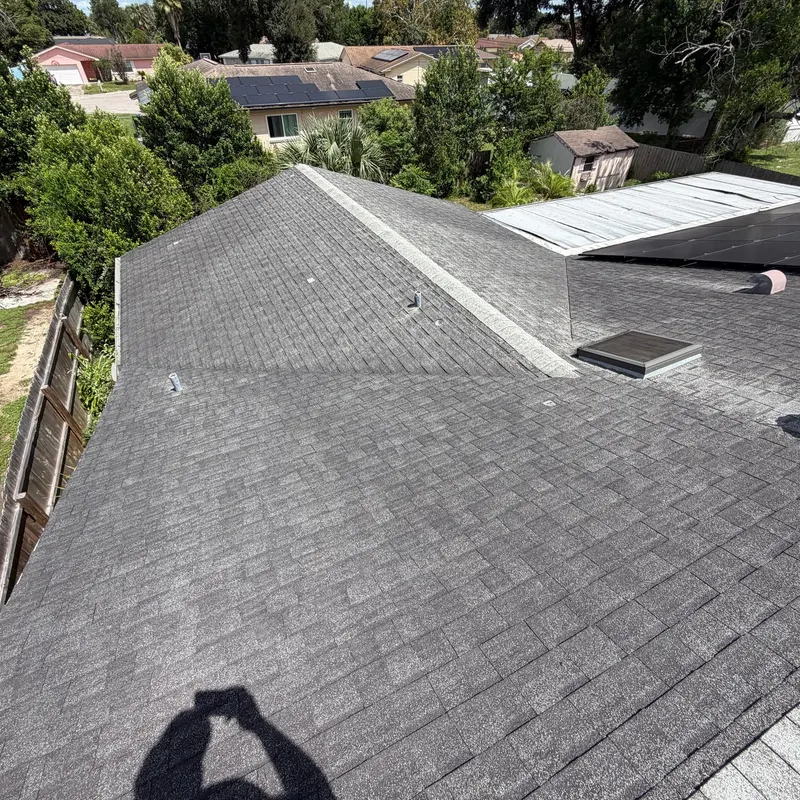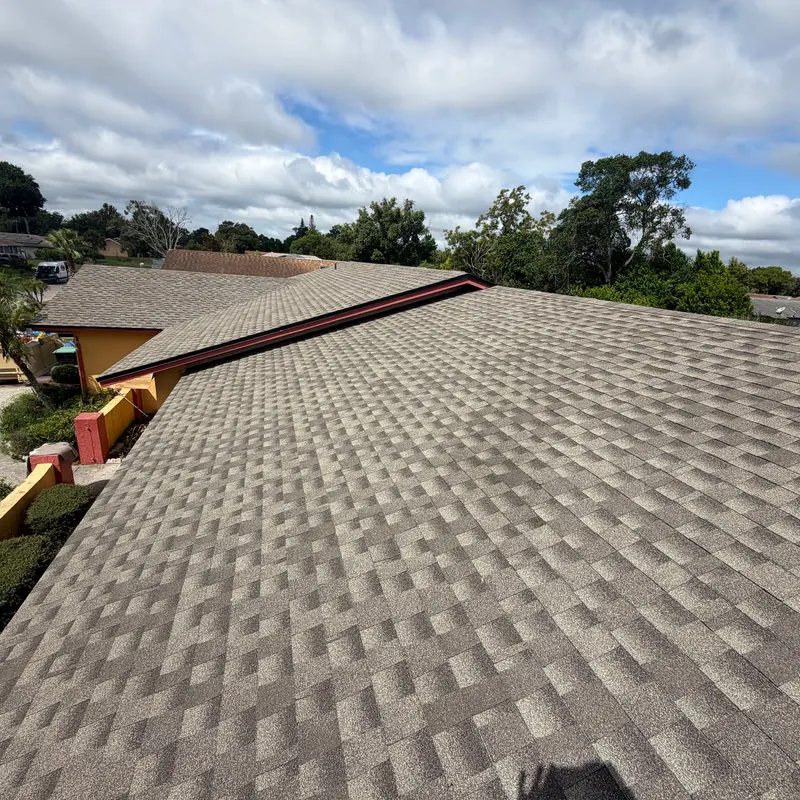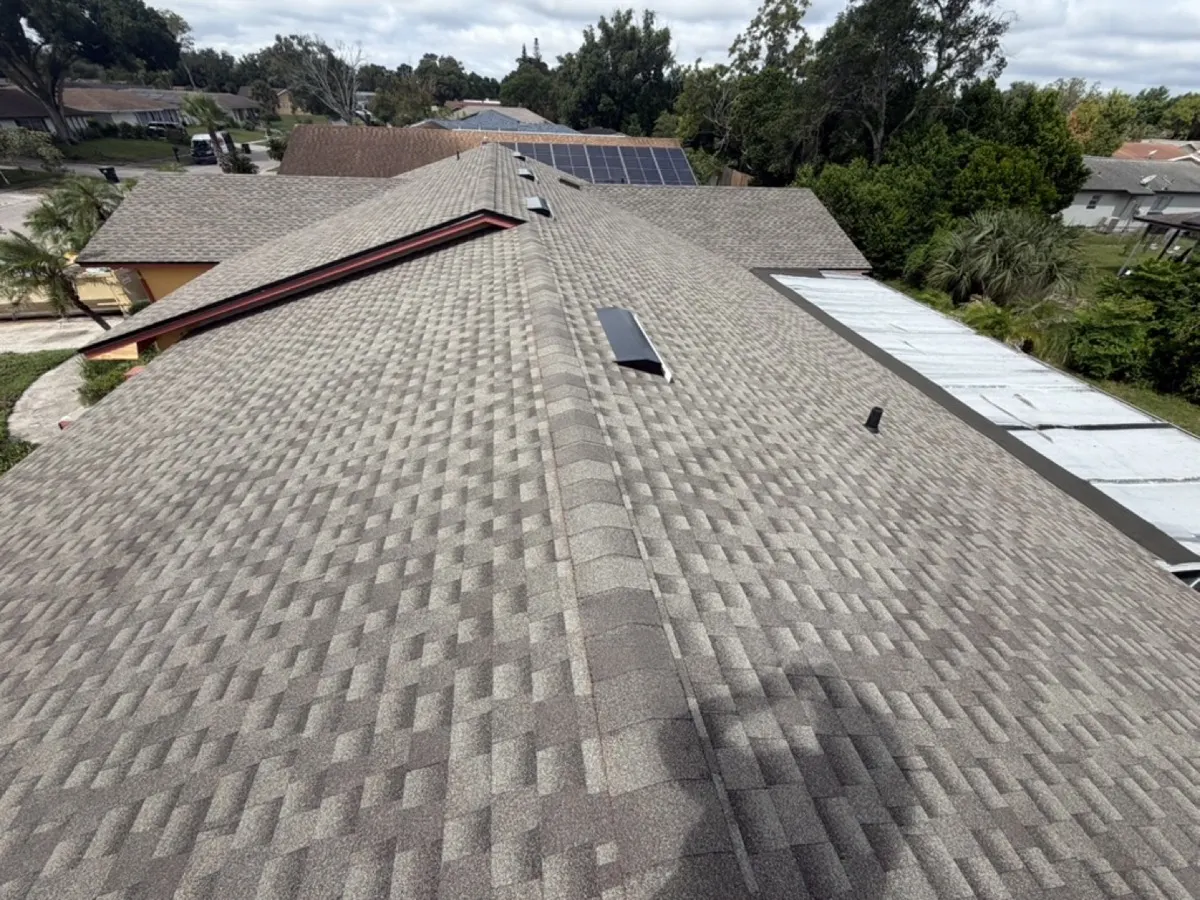
When repair stops making sense on a Leesburg roof
We are a repair-first company, so we hold replacement to a higher standard than "it looks old." A roof earns a replacement recommendation when several of these show up together during the free inspection:
- Granules in the gutters and bare asphalt showing. Once the mineral surface is gone, Florida sun breaks the mat down quickly. On a south-facing slope in Highland Lakes this often shows years before the north slope.
- Shingles that crack when lifted. A repair needs shingles flexible enough to be lifted and re-sealed. Brittle three-tab from the 1990s snaps instead, so every repair creates two new openings.
- Leaks on more than one slope. One leak at a pipe boot is a repair. Stains in the garage, the lanai ceiling and a back bedroom point to a system that has reached the end of its life.
- Soft decking from the attic. Dark, delaminated plywood around valleys or eaves means water has been getting past the underlayment for a long time.
- Patches on patches. Three colors of shingle, roof cement smeared along the valleys and a tarp that has been up since Milton all say the same thing.
- A renewal letter that asks for roof documentation. Florida carriers can ask for an inspection on a roof 15 years or older; at that point the roof's remaining life becomes a paperwork question as well as a water question.
Age alone is not the test. A well-ventilated architectural shingle roof from 2004 in Legacy of Leesburg can be in better shape than a 2012 roof over a hot, unvented attic in an older Palmora Park ranch. We look at condition, then age, then the 25 percent rule below.